


Oral Cancer Screening provided by Osborne Dentistry in Lebanon, OR
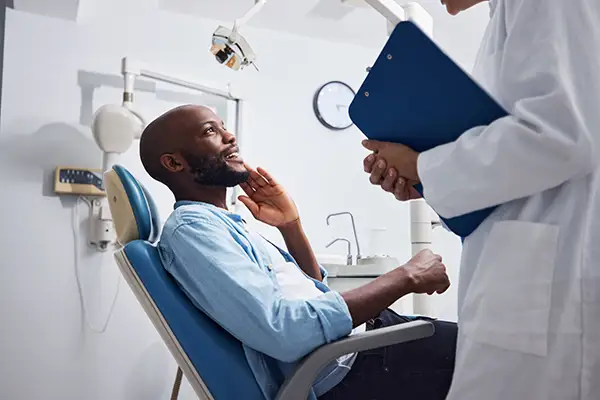 If you are experiencing discomfort in your teeth or gums and are ready to get your oral health back on track, we have a quality dental care team that can get you the best treatment that fits your condition. Come see our professionals at Osborne Dentistry for a dental exam to identify the cause of your discomfort. If you are experiencing discomfort in your teeth or gums and are ready to get your oral health back on track, we have a quality dental care team that can get you the best treatment that fits your condition. Come see our professionals at Osborne Dentistry for a dental exam to identify the cause of your discomfort.A dental exam is the first step on your journey to a brighter and healthier smile. Once you have completed your exam, our team will work with you to develop a custom treatment plan tailored to meet your needs. This will include follow-up exams and any necessary steps to improve the function and appearance of your smile. What Happens During a Dental Exam?A dental exam is a simple and non-invasive oral health procedure. During your exam, our professionals will carefully inspect every area of your oral cavity, including your gums and other soft tissue. Your exam will be accompanied by a professional teeth cleaning. One of our team members will brush and floss your teeth, as well as check for symptoms of chronic conditions such as gum disease. We check for gum disease by measuring the depth of the naturally occurring pockets that exist between your teeth and gums. Once this is completed, we will also conduct an oral cancer screening to check for any abnormalities. If this is your first exam with us, you will likely get X-rays as well. These images allow our professionals to better understand your oral health needs and get a complete view of your oral cavity. X-rays are updated as needed. How Often Do I Need a Dental Exam?According to the American Dental Association, you should receive an oral exam and cleaning every six months. Exams conducted in these intervals allows our team to monitor your oral health and provide feedback on your oral hygiene practices. Regular exams are also important because they allow our team to diagnose and treat any oral health conditions much earlier. If left untreated, conditions like decay can become substantially more serious and require multiple procedures to correct. What If a Cavity Is Found?If our team locates a cavity during your dental exam, we will let you know during your visit and discuss treatment options with you. The treatment that our team recommends will vary based on how severe the decay is. Minor cavities can often be treated during the very same visit through the use of a dental filling. When placing a filling, we will administer a local anesthetic to keep you comfortable during the procedure. We will then drill out any decayed material from your tooth. A composite material is used to pack the hole and protect your tooth from further decay. This material will harden after our team finishes molding and shaping it. Schedule an AppointmentThere is no need to wait until you are experiencing dental health issues to see a dental professional. Preventative treatment such as receiving regular dental exams is the key to a lifetime of good oral health. If you are ready to schedule your exam with our professionals at Osborne Dentistry, then you can contact us at 541-451-4300 today. |
Oral Cancer Screening Lebanon, OR When people mention preventive dental practices, many patients simply think of getting their teeth cleaned and examined. Preventive dentistry includes much more than just a simple teeth cleaning, however. Our professionals at Osborne Dentistry are always looking for ways to better serve our patients. When people mention preventive dental practices, many patients simply think of getting their teeth cleaned and examined. Preventive dentistry includes much more than just a simple teeth cleaning, however. Our professionals at Osborne Dentistry are always looking for ways to better serve our patients.One way that we have sought to accomplish this goal is by including an oral cancer screening during every dental exam. An oral cancer screening simply involves our professionals carefully inspecting your oral cavity for any unusual growths or developments. This can include things such as a lump or bump in your mouth or on your gums. Sores that do not heal or go away are also another common indicator of oral cancer that our team checks for during these screenings. If anything abnormal is detected, our professionals will connect you with the appropriate healthcare professionals needed to conduct further follow-up. Generally, any abnormal growth is biopsied to determine if it is malignant. A biopsy is simply a surgical procedure that involves removing a tiny portion of the growth and sending it to the lab for analysis. This simple procedure can allow your doctors and our professionals to work together to best treat you. How Common Is Oral Cancer?Based on data collected by the Mayo Clinic, approximately 3% of all new cancer cases diagnosed each year in the United States are a form of oral cancer. These diagnoses are most common in men over the age of 40, but women are also at risk. Certain risk factors and conditions can increase your risk of oral cancer. The vast majority of oral cancers are linked to tobacco or alcohol use. Infection with certain chronic diseases such as HPV can also increase the risk of contracting oral cancer. Oral cancer screenings are important, even if you do not have any of the risk factors. Early detection of oral cancer or pre-cancerous developments can significantly improve the success rates of any treatment plans and help you have a favorable outcome. How Is Oral Cancer Treated?Oral cancer is treated very similarly to other forms of cancer. However, special care must be taken to protect the structures of the oral cavity and airway. Generally speaking, surgery is used to remove the cancerous material as soon as is safely possible to do so. The surgical treatment route is paired with other treatments in many cases. After surgery, many patients will receive either chemotherapy or radiation therapy to kill cancer cells that may not have been removed during the surgery. Some patients receive both chemo and radiation, depending on their needs. Once the cancer treatments are complete, our professionals can utilize various surgical procedures to reconstruct your teeth and gums. These corrective procedures are often needed when a large growth or multiple growths are removed, resulting in damage to your oral cavity. The best way to combat oral cancer is to take a proactive approach. This means getting regular oral cancer screenings from our professionals at Osborne Dentistry and receiving any follow-up treatment promptly if it is recommended. You can schedule your appointment with us by calling our office at 541-451-4300 today. |